
Doug Woodham | November 2026
Why can comparable works by the same artist sell for dramatically different prices at galleries and auctions? Five principles explain the economics behind these differences and how collectors can use them to make smarter buying decisions.
Every year, thousands of artworks are for sale at gallery exhibitions and auctions around the world. Many are by the same artists, including Andy Warhol, Rashid Johnson, and Henri Matisse, whose works appeal to a broad range of collectors.
With so many works available through both channels, a recurring question for collectors is whether galleries or auction houses offer better prices. The answer lies in understanding the economics of how prices are set. In the primary market, artists typically sell new works through galleries that represent them. In the secondary market, previously sold works change hands through galleries, auction houses, and private dealers. Although galleries and auction houses often sell works by the same artists, the way they establish prices can differ considerably, creating opportunities for buyers to acquire comparable works at different prices.
Drawing on my experience as a collector, art advisor, and former President of Christie’s Americas, I’ve identified five principles that help explain when and why these price differences arise. Together, they provide a framework for deciding when to buy from a gallery and when to bid at auction.
1. If an artist rarely appears at auction, prices can be much lower than at galleries
Galleries devote considerable time and effort building a buyer base for their artists. Because artworks are unique and collectors' preferences can vary widely, finding a buyer for a particular work takes time. Ask three people at a gallery opening to point out their favorite work, and you will likely get three different answers.
For artists with a small collector base, there is no guarantee that someone who knows the artist and wants the particular work being offered will participate in an auction. With limited competition among bidders, a work may sell for substantially less than a gallery would ask for a comparable piece. As a rule of thumb, works by artists who appear at auction no more than a few times a year will often sell for less than comparable works offered by galleries.
2. If galleries ration works by hot artists, auction prices can soar
Managing sales of work by “hot artists” brings galleries both pleasure and pain. They want to place works with the “right” collectors and institutions, even if that means selling for less than other buyers would willingly pay. Galleries are also reluctant to raise prices too quickly, fearing the consequences if an artist's career loses momentum. But when works leak into the auction market, collectors shut out by galleries can bid freely against one another. Speculators may also join the fray, helping push auction prices far above what the galleries charge.
This is hardly a new phenomenon. A striking example dates to 2016, when Njideka Akunyili Crosby became one of the most sought-after young artists in the market. After earning an MFA from Yale and completing a residency at the Studio Museum in Harlem in 2011, Crosby began attracting attention through gallery exhibitions. Her breakthrough came in 2015, when her work appeared at the Hammer Museum in Los Angeles and the New Museum's Triennial in New York. Soon afterward, London's Victoria Miro Gallery announced it would represent her. When Crosby's eagerly anticipated first exhibition opened there in October 2016, demand was overwhelming. The gallery told The Economist that more than a dozen public institutions wanted her work, which it was offering for less than $100,000 per work. With museums at the front of the line, private collectors had little chance of buying anything.
But galleries can control their asking prices, not what happens when collectors resell. Shortly after the Victoria Miro exhibition closed, Sotheby's offered a Crosby painting in its November 17, 2016, contemporary art evening sale. Estimated at $200,000 to $300,000, it fetched $1.1 million, including buyer's premium. Four months later, a slightly larger work sold at Christie's in London for $3.1 million. The biggest winners were not Crosby or her gallery, but the early collectors fortunate enough to own her work. By holding gallery prices down, they helped hand those collectors enormous windfall gains.
The lesson: When galleries ration an artist's work, buying at auction is unlikely to be a bargain. But for collectors unable to get through the gallery's door, it may be the only option.
3. If an artist falls out of favor, auction prices can plunge while galleries hold firm
As an artist's career develops, galleries raise prices not only to reflect growing demand but also to signal that the artist is on the rise. Many collectors find it difficult to judge an artist's importance and interpret rising prices as evidence of success. But when demand weakens, galleries are reluctant to reverse course. Cutting prices risks signaling that the artist's career has stalled, or worse. Auction houses face no such reluctance. When works come up for sale, bidding can reveal just how far demand has fallen, with prices sometimes well below what galleries continue to ask.
To protect the innocent, I won't name artists who find themselves in this predicament. But the opportunities aren't hard to spot. Compare gallery asking prices with publicly available auction results, and the gaps can be striking. For collectors who admire an artist whose market has cooled, auctions can offer exceptional bargains. Alert services from Artnet, Invaluable, and major auction houses make it easy to track when works by favorite artists come up for sale. Rather than paying yesterday's gallery prices, patient collectors may be able to buy at today's auction prices.
4. If a masterpiece goes to auction, collectors may pay prices they would reject in a private sale
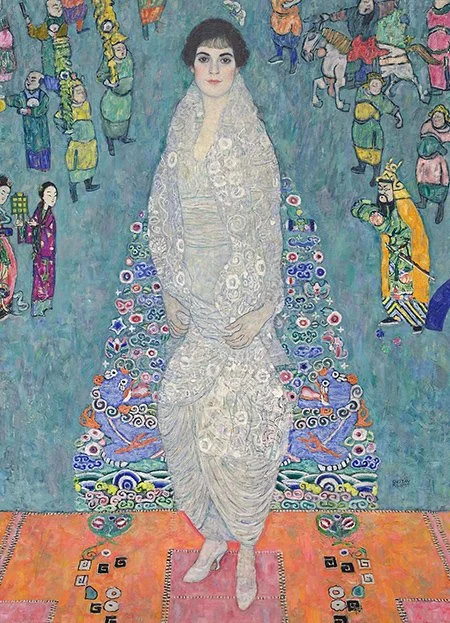
Gustav Klimt, Portrait of Elisabeth Lederer (1914–16). Sold at Sotheby's in November 2025 for $236.4 million.
Collectors of masterpieces face a peculiar problem. With so few people able and willing to spend tens or hundreds of millions of dollars on a single artwork, how can they know what it is worth? Consider Gustav Klimt's Portrait of Elisabeth Lederer, offered at Sotheby's in November 2025 with a presale expectation of around $150 million. Nothing comparable had appeared at auction in years. What was it worth?
Offered privately, even the wealthiest collectors might hesitate to pay such a staggering sum without evidence that others valued the painting as highly. But at auction, that hesitation can evaporate. Seeing other collectors compete for a masterpiece provides reassurance about its value, sometimes encouraging bidders to pay far more than they would have agreed to privately. Auction house specialists have plenty of stories about offering masterpieces privately to collectors who balk at the asking price, only to watch those same collectors bid against one another when the works reach auction.
And the Klimt? After a 20-minute bidding battle, it sold for $236.4 million, including buyer's premium.
5. If an artist's market is liquid, gallery and auction prices converge, but bargains still emerge
In a liquid market, buyers can readily compare prices, making it difficult for large differences between galleries and auctions to persist. Consider Yayoi Kusama. She has been so prolific that collectors rarely have to search high and low to find something to buy. If they strike out at one of the galleries representing her, they can try an auction, visit an art fair, or call one of the many dealers offering her work on the secondary market. All this comparison shopping helps keep prices for similar works in line.
But even the Kusama market has its quirks. At times, auction prices climb above gallery prices, only for the relationship to flip a few months later. Why? Because despite the abundance of available works, the number of collectors shopping for a particular kind of Kusama at any given moment can be surprisingly small. A handful of enthusiastic buyers can temporarily push prices higher in one channel, while bargains go unnoticed in another. Collectors who shop around can take advantage of these gaps. Those who buy on impulse may discover they paid more than they needed to.
How collectors can spot buying opportunities at galleries and auctions
Finding bargains takes research and discipline, but the effort can pay off handsomely. Start by identifying a short list of artists whose work you would like to own, then monitor their auction activity. When something interesting comes up, speak with the auction house specialists about the work and how they arrived at the presale estimate. These conversations are easy to arrange because specialists welcome inquiries from potential buyers.
Keep up with developments in your chosen artists' careers. Changes in gallery representation, museum exhibitions and acquisitions, and the frequency of gallery shows can all signal shifts in demand. So can the breadth and depth of press coverage. And whenever you encounter works by these artists at galleries or art fairs, ask about prices. Even when a work has already sold, gallery staff may be willing to share roughly what it brought.
Of course, comparing prices requires comparing similar works. Two paintings by the same artist can command very different prices depending on their size, date, quality, condition, and provenance. And when comparing gallery prices with auction results, remember that the buyer's premium can add substantially to the hammer price. What looks like a bargain at first glance may not be one after accounting for these differences.
The goal is not simply to buy art cheaply, but to recognize when the market offers an opportunity to acquire a work you genuinely want at an attractive price. The more you know about an artist's market, the better equipped you are to recognize those opportunities.
The same market knowledge matters when it comes time to sell. For a closer look at how collectors can choose between galleries, private sales, and auctions when selling their art, see my article, Selling Valuable Art: What Every Collector Needs to Know.
Financial Advice for Art Collectors
Buying art is only one of the financial decisions collectors face. As collections grow and circumstances change, questions about selling, estate planning, and charitable giving become increasingly important. Doug Woodham helps collectors and families navigate these decisions, drawing on his extensive experience in the art market and wealth management industry. Learn more about Doug Woodham's advisory services.
About Doug Woodham
Doug Woodham is Managing Partner of Art Fiduciary Advisors, a New York–based firm that advises collectors and families on financial decisions involving art. He previously served as President of Christie’s Americas and as a partner at McKinsey & Company, where he advised asset- and wealth-management clients in the United States, Europe, and Asia. An economist with a Ph.D. from the University of Michigan, he is also the author of Jean-Michel Basquiat: The Making of an Icon and Art Collecting Today: Market Insights for Everyone Passionate About Art.